
Last updated November 25, 2026
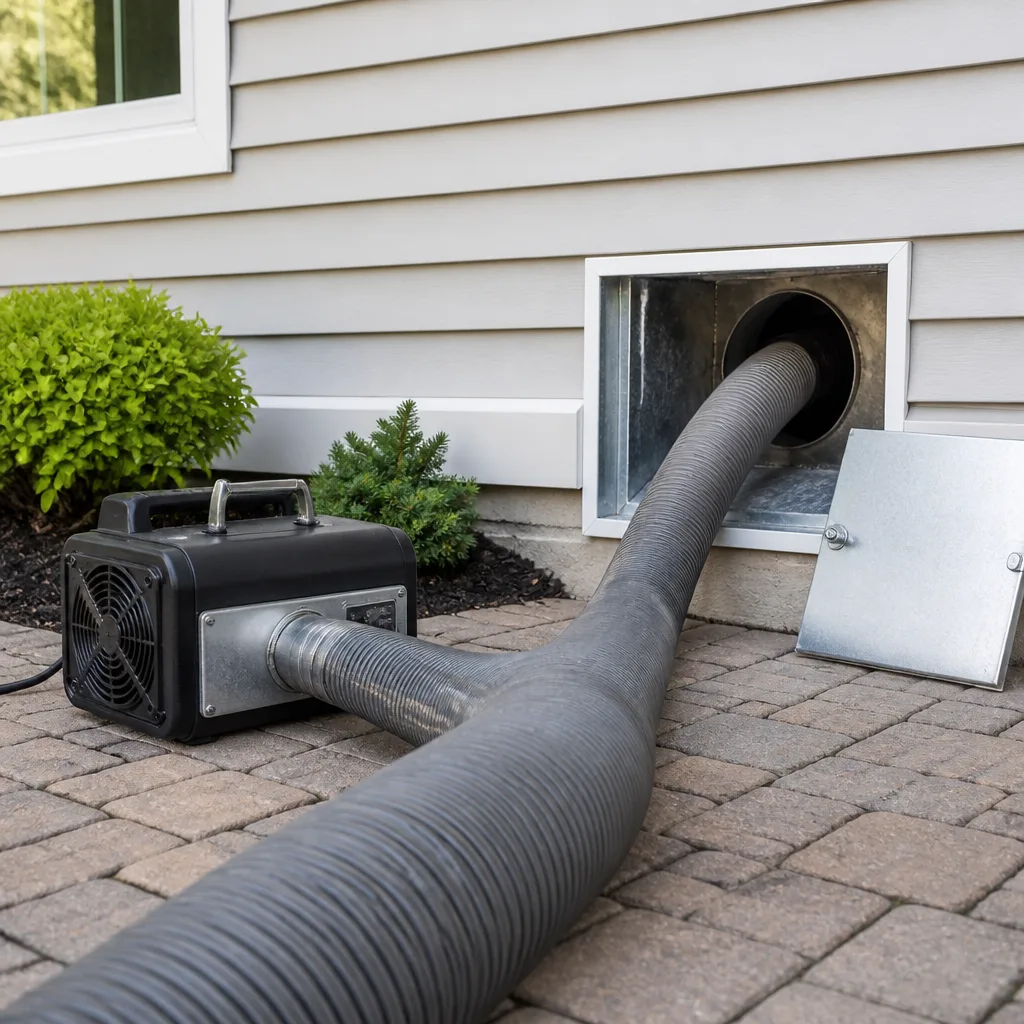 Whole-home duct cleaning
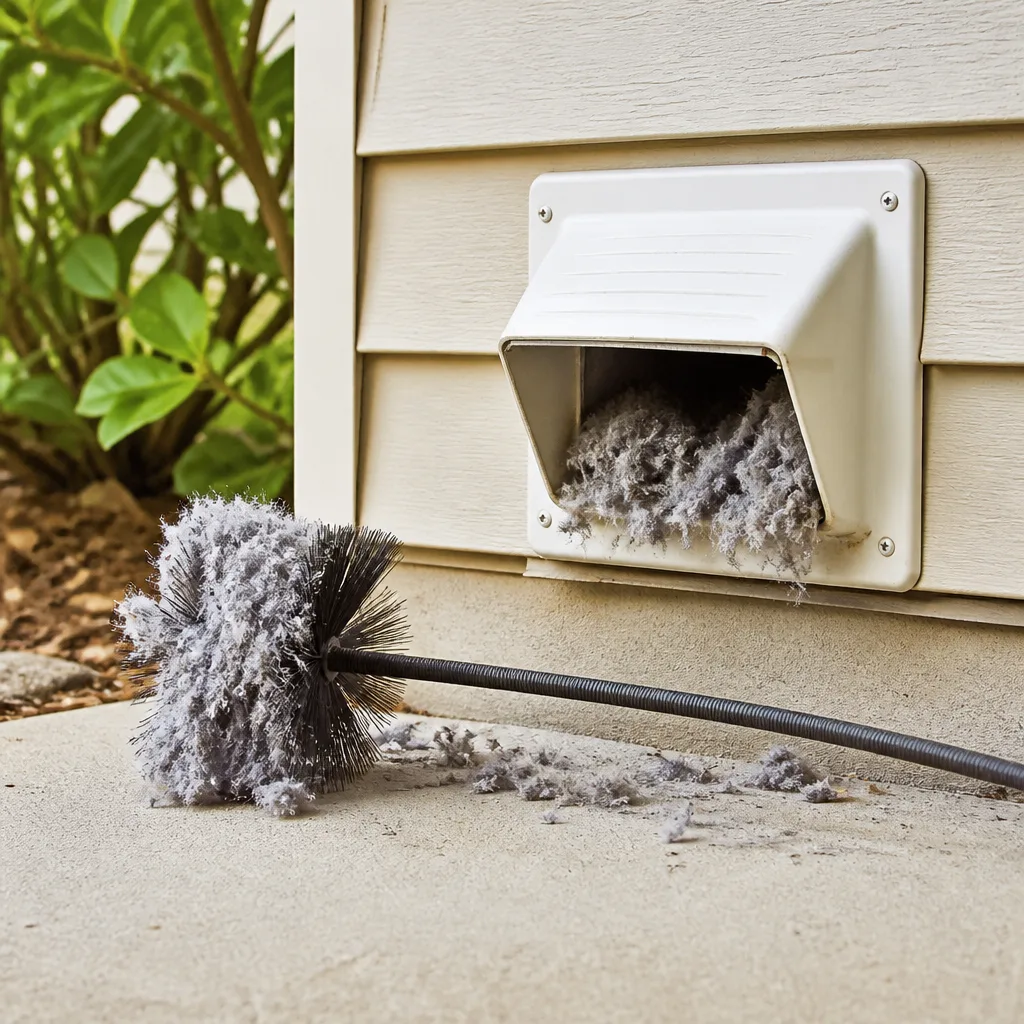 Dryer vent cleaning
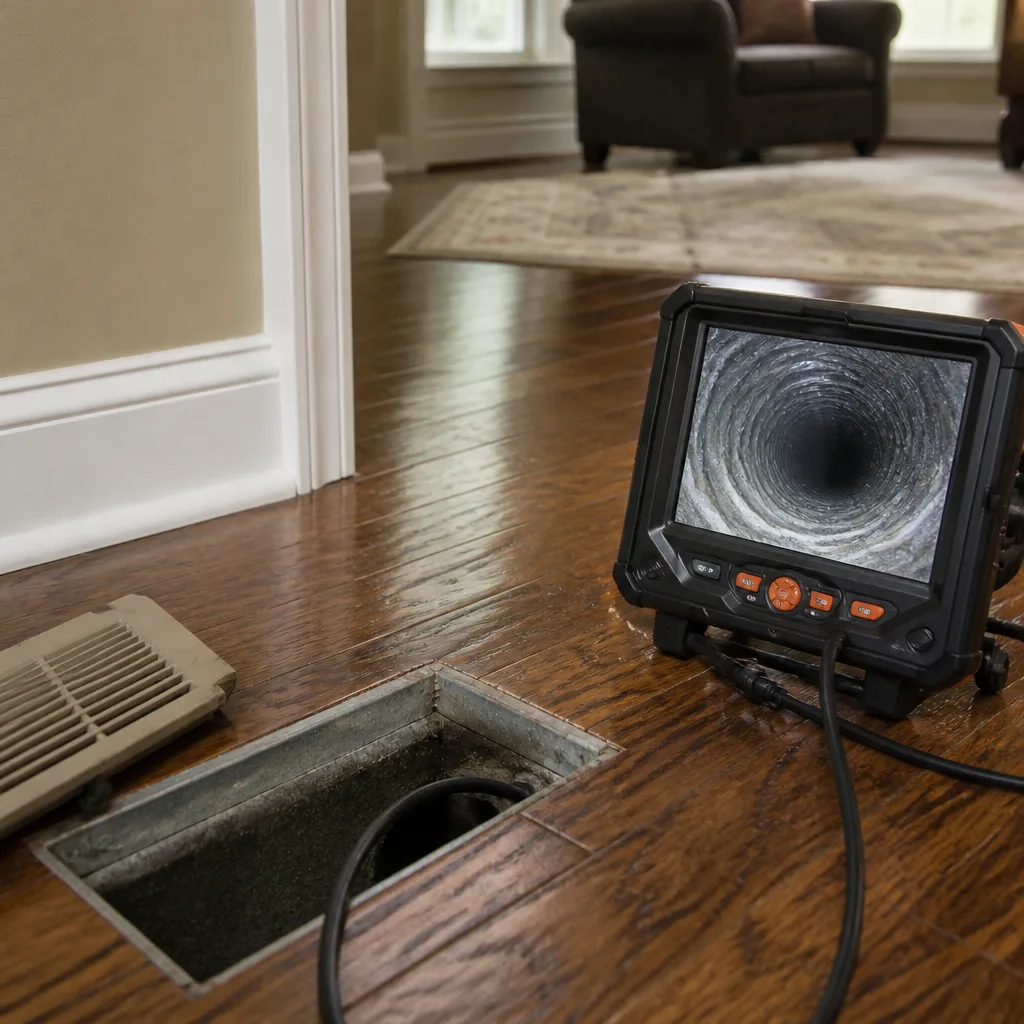 Camera inspection
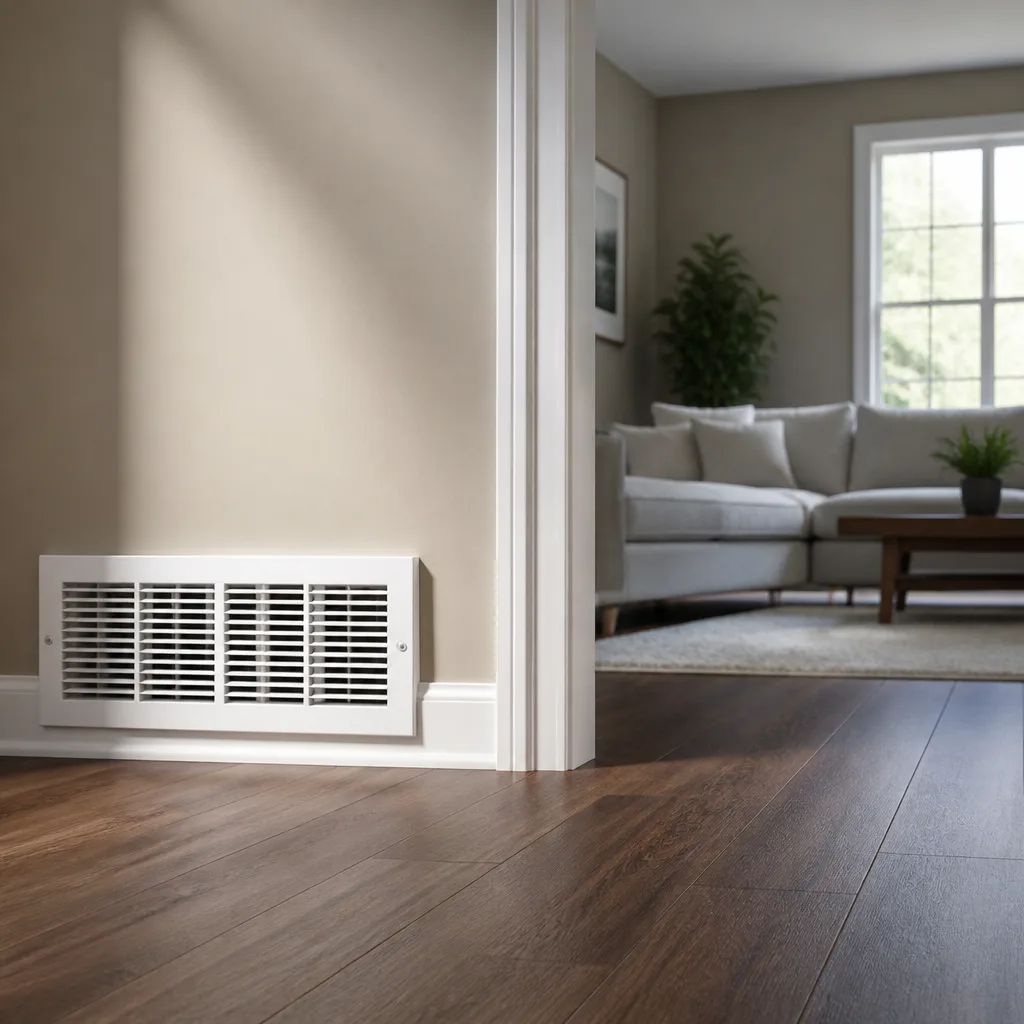 Sanitizing & deodorizing
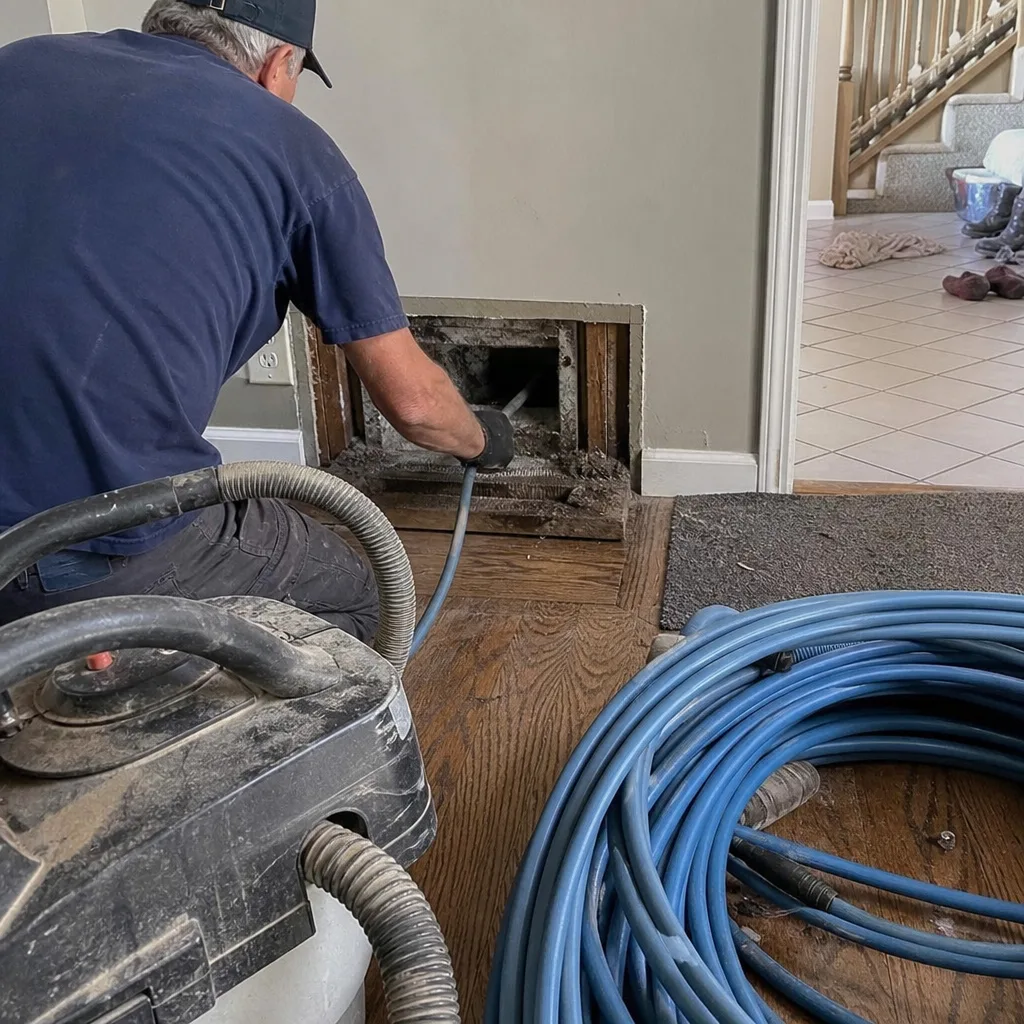
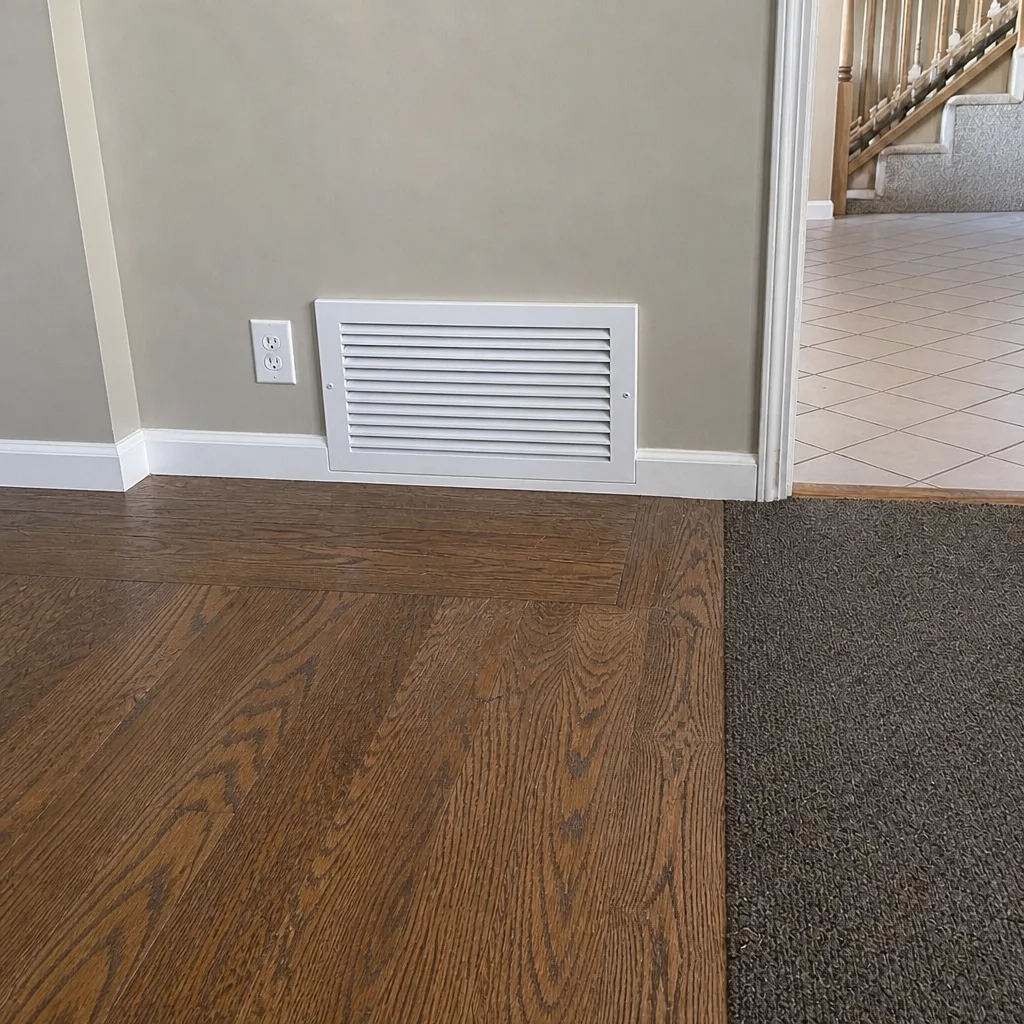
Whole-system duct and dryer vent check with before-and-after photos - you see exactly what came out of your vents
That "$99 whole-house special" is a bait ad - the real number appears once they are in your hallway, or the "clean" is a shop-vac at the register. We photograph the inside of your ducts before and after instead.
Air Duct Cleaning Permits, Codes & Inspections in Brighton, CO: What You Need to Know
No permit is needed to clean your ducts. But if the technician also cuts in a new access panel, seals a disconnected trunk, or modifies any duct connection, the rules change fast. That line between maintenance and alteration is where most Brighton homeowners get surprised, and it’s the reason we wrote this guide. What follows is a plain explanation of how Brighton’s adopted mechanical codes treat duct work, where cleaning stops and permitting begins, what to ask a contractor to document, and how inspection history can follow a duct system all the way to closing day.
Quick Answer
Cleaning the inside of an existing duct system is maintenance and does not require a permit in Brighton. Repairing, replacing, rerouting, or adding to the duct system is generally classified as a mechanical alteration, and work of that scope typically needs a mechanical permit through the City of Brighton’s building department. If your project only removes dust and debris, you’re in the clear. If it changes the system, ask who is pulling the permit.
Styles & brands we work with
- Whole-home duct cleaning
- Dryer vent cleaning
- Camera inspection
- Sanitizing & deodorizing
Table of Contents
- Cleaning vs. alteration: where Brighton draws the line
- How Brighton’s adopted mechanical code treats duct systems
- When duct repair and sealing cross into permitted work
- City of Brighton vs. Adams County jurisdiction
- What to ask your contractor to document
- What an inspection of duct work actually covers
- How duct work history affects a Colorado home sale
- Duct modification as part of an HVAC upgrade
Cleaning vs. alteration: where Brighton draws the line
The distinction matters because the two activities look almost identical from the driveway. A technician pulls up with a vacuum and hose, spends a few hours on the system, and drives off. Nothing about that scene tells you whether a permit was required.
Here’s the practical split. Cleaning removes accumulated dust, debris, pet hair, and construction residue from inside ducts that are already where the builder put them. It doesn’t change the shape, size, routing, or connection of anything. Sealing, by contrast, might involve joining a trunk that has separated at a fitting, taping a joint that has opened, or replacing a section of flex that has collapsed. The first is housekeeping. The second touches the mechanical system itself.
Most building departments, Brighton included, work from a similar logic: if the work affects how the system performs as an engineered assembly, it belongs in the permitted category. A few examples help clarify:
- Clearly maintenance: source removal cleaning of supply and return ducts, register and grille cleaning, sanitizing the interior of an existing duct run, and blower compartment cleaning.
- Usually permitted: cutting a new access panel into a trunk line, replacing a damaged section of duct, rerouting a run to serve an added room, or installing new ductwork for a system changeout.
- Depends on scope: sealing disconnected joints, adding a return air path, or correcting a crushed flex run in a tight crawlspace. Small repairs often fall under a repair allowance; anything larger typically needs a permit.
In our experience across Brighton homes, the tricky cases come up in older neighborhoods where duct systems have been added to or modified over several owners. What looks like a simple seal job can turn into opening a line that was never fully closed out. That’s why it’s worth knowing the line before the work starts, not after.
How Brighton’s adopted mechanical code treats duct systems
The City of Brighton operates under a set of adopted model codes, and its mechanical provisions govern the installation, alteration, and repair of duct systems. The core question the code asks about any duct project is simple: does this work change the system, or does it maintain it?
For residential ductwork, the code addresses several things that matter to homeowners considering a cleaning or repair:
- Material and installation standards. Duct material, support spacing, and sealing requirements are specified for new work and for alterations. If a technician replaces a run, that new run has to meet the current standard.
- Access requirements. Duct systems need adequate access for cleaning and inspection. In practice, cutting a new access panel to reach a section of duct is a code-relevant modification, not a cleaning step.
- Sealing standards. The code recognizes that duct leakage affects system performance and energy use. Sealing is treated as a legitimate part of the mechanical system, not a cosmetic afterthought.
- Return air and combustion safety. In homes with gas-fired appliances, duct modifications have to preserve the pressure relationship between the duct system and the combustion air supply. A return added in the wrong place can create backdrafting. This is one of the reasons Brighton’s older housing stock deserves attention before any return-side change.
Brighton’s climate makes the practical stakes clear. Summers push into the high 90s, winters bring hard freezes, and a duct system that leaks in either season is a duct system that quietly costs the homeowner money. That’s part of why duct repair and sealing exists as a service line in the first place. Sealing a failed joint is a performance fix. Whether it’s a permitted fix depends on the scope.
The reliable approach: ask the building department before assuming. Brighton’s permit staff can tell you in a short conversation whether your specific project needs one. For the cleaning side of things, our air duct cleaning service stays firmly in the maintenance category, which is one reason it’s straightforward to schedule.
When duct repair and sealing cross into permitted work
This is the section to read carefully if your home has a duct problem. Cleaning a system that’s intact is one thing. Repairing a system that isn’t is another, and the permit question turns on scope.
Here’s how we characterize it in our Brighton Air Duct Cleaning Pros work: if the repair is small and local, it’s often handled as routine repair. If it involves removing and reinstalling duct sections, adding or removing a run, or affecting the system’s overall balance, it usually needs a mechanical permit. The test is not the dollar figure. It’s the footprint of the change.
A typical sequence for a repair that needs a permit:
- Identify what’s actually wrong. A disconnected trunk, a collapsed flex run, or a crushed rigid duct each have a different repair.
- Determine scope. Does the repair stay within one fitting, or does it extend to a section of duct, an added run, or a connection point?
- Ask the City of Brighton building department whether the scope triggers a permit. Be specific about what’s being replaced or added.
- If a permit is required, confirm who is pulling it: the homeowner or the contractor. Doing it yourself is allowed in many cases but transfers the paperwork to you.
- Complete the work, then schedule the inspection if one is required.
Sealing deserves a word of its own. Taping a joint, applying mastic to a leaking seam, or sealing around a boot is generally treated as repair, not alteration. Cutting a new access panel, however, is drilling into the system in a way the code cares about. Our dryer vent cleaning and duct sealing work are separate scopes, and on the sealing side we always clarify scope in writing before a technician starts, so nothing gets done that wasn’t discussed.
The point is not to make you afraid to fix a duct. It’s to make sure you don’t have unpermitted alteration on your title record years from now.
City of Brighton vs. Adams County jurisdiction
Brighton straddles a county line, which is one of the more confusing aspects of building code here. Roughly speaking, properties within the city limits fall under the City of Brighton’s building department. Properties in the surrounding unincorporated area, still addressed to Brighton, may fall under Adams County’s jurisdiction. A handful of parcels closer to the county line can land on the other side of that split.
Why this matters: the two departments can have different accepted editions of the mechanical code and different permitting procedures. For a homeowner planning duct work, the practical questions are:
- Is the property inside the Brighton city limits or in the unincorporated county area?
- Which department issues the mechanical permit for this address?
- What documentation does that department expect from the contractor at final inspection?
The answer is on your property tax notice, your address listing, or simply a call to either department with your parcel number. We’ve found that homeowners who check this first save themselves a round of back-and-forth later. It’s particularly worth verifying if your home is in the corridor along the county line, where the jurisdiction isn’t always obvious from the address.
One more wrinkle: some neighborhoods outside city limits fall under county code with its own permit fee schedule and inspection process. Nothing dramatic, but the paperwork goes to a different office. If you’re not sure, call the department you pay property taxes to.
What to ask your contractor to document
This is the section that protects you five years from now. If any duct work is done on your home, whether cleaning or repair, you want a paper trail that answers the obvious questions: what was done, what was found, and what was documented.
Ask for the following, and keep it with your home records:
- A written scope of work. Cleaned only, repaired and sealed, or modified. The description should be specific enough to distinguish maintenance from alteration.
- The permit number, if a permit was pulled. Write it down. The permit is your record that the work was reviewed, not just performed.
- Before-and-after photos of your own system. Photos of your system, not stock imagery, are the most reliable evidence that the work described actually happened.
- A statement about what equipment was used. Not every homeowner cares, but the record helps if a future buyer asks. Truck-mounted or portable professional-grade machines leave a different footprint than a shop vacuum.
- The name of the person who performed the work, on the invoice. A repair record with a name attached is easier to defend than an unattributed receipt.
- Any noted findings that were not addressed. If the technician observed a crushed run in a crawlspace that was outside the scope, that should appear in writing.
If a contractor can’t produce a written scope or doesn’t want to discuss permits, that’s information too. In our work we document the scope in writing before a technician starts, and we provide before-and-after photos of the duct system as part of the service. Not because the law requires it every time, but because it’s the difference between a record you can rely on and a vague memory.
If you’re planning a full indoor-air tune-up, our HVAC cleaning team follows the same documentation habit, so the cleaning and the assessment live in the same file.
What an inspection of duct work actually covers
If a permit was pulled for a duct repair or modification, an inspection typically follows before the job is considered closed. It’s usually brief. The inspector isn’t going to re-clean your ducts. What they check is that the work matches the permit scope and that the installation meets the code requirements for the work performed.
In practice, an inspection of duct work usually covers:
- Whether the duct material, support, and sealing match what the code requires for the alteration.
- Whether access panels and connections are installed properly and are serviceable for future cleaning.
- Whether return air paths are correct and there’s no obvious depressurization risk with combustion appliances.
- Whether the scope of work on the permit matches what was actually installed.
An inspection is not a cleaning quality inspection. The inspector is there to verify code compliance, not to check whether every register was cleaned. That distinction catches some homeowners off guard. It’s why a cleaning-only job is best paired with the contractor’s own documentation: photos, a written scope, and a plain description of what was cleaned and found.
Inspections also matter for resale. A passed final inspection goes into the permit record, and a future buyer or their agent can pull that record. A home with documented, permitted duct work has a clean paperwork story. A home with unpermitted modifications has a hole in the record.
How duct work history affects a Colorado home sale
Colorado is a disclosure state for residential sales, and sellers are expected to disclose known material conditions of the property, including unpermitted work. If a home has unpermitted duct modifications, that becomes a disclosure item when the house goes on the market. Buyers can ask for evidence that the work was permitted, and if that evidence doesn’t exist, the conversation usually gets renegotiated.
Three patterns come up in our experience with Brighton area homes:
- Cleaning only, documented. No permit needed, and the record is straightforward. Photos and an invoice usually suffice.
- Repair done without a permit. Common in older homes where a disconnected trunk was taped up by a previous owner or a handyman. It surfaces at inspection when the buyer’s inspector notes the taping, and it becomes a negotiation item.
- Modification done with a permit. The final inspection is on file with the city or county, and the buyer’s agent can confirm it. No surprises.
The cleanest approach for modern homeowners: if you’re hiring for anything beyond cleaning, ask whether the scope requires a permit before you agree to the estimate. The cost of pulling the permit is a fraction of the cost of dealing with an unpermitted record during a home sale.
If you bought the home recently and aren’t sure about its duct history, a cleaning and assessment gives you a documented starting point. From there, you’ll know what’s intact and what may need repair. Guardsman and Rotobrush equipment used in a proper source-removal cleaning lets you see exactly what the inside of the system looks like.
Duct modification as part of an HVAC upgrade
Here’s where the permit question becomes unambiguous. When ducts are modified as part of an HVAC equipment upgrade, the work falls squarely in the permitted category. A system changeout that involves resizing plenums, adding or removing supply runs, or reworking return air paths is mechanical alteration, and it needs a permit in Brighton just about every time.
This matters for homeowners who are told their ducts need to be “upgraded” during a cleaning visit. Sometimes that’s true. Old flex with a collapsed liner really is restricting airflow, and a sealed and repaired system really does perform better. But upgrades that change the layout of the duct system go through the permit process, not around it.
Tell the two apart by asking what the work actually involves:
- Cleaning your existing ducts: no permit. Removes what’s inside; doesn’t affect the system’s design.
- Sealing and repairing your existing ducts: permit depends on scope. Small repairs are usually fine; anything that touches the system’s layout is generally permitted.
- Resizing, rerouting, or adding ducts: permit required, every time. This is alteration, not maintenance.
- Duct work tied to an HVAC changeout: permit required as part of the equipment permit. A single mechanical permit typically covers both.
Brighton Air Duct Cleaning Pros specializes in indoor air quality work and does not install or repair HVAC equipment. If your ducts are going to be modified for a new system, the HVAC contractor handles that scope and the permit. Our role is cleaning, sanitizing, sealing, and repair, with a clear written scope so you know what’s covered and what isn’t. Abatement Technologies equipment we use is the same category of tooling used in professional remediation work, and Honeywell and Aprilaire system components are part of the compatibility picture we work with on higher-end residential systems. What we don’t do is pretend a cleaning visit is a system upgrade.
Common Mistakes to Avoid
- Assuming the permit question doesn’t apply. Cleaning doesn’t need one, but repair and modification often do. Read the scope, not the invoice title. If it sounds like more than cleaning, treat it like more than cleaning.
- Letting a technician add an access panel without a conversation. Cutting a new access panel is a modification, not a cleaning step. Ask why it’s needed and whether the scope includes a permit.
- Accepting verbal-only documentation. If there’s no written scope, no photos of your own system, and no permit number, you have nothing reliable to show a future buyer. Insist on paperwork.
- Assuming county and city permit rules are identical. Brighton straddles the city-county line, and a property in the unincorporated area may be under a different department with a different process.
- Ignoring combustion air concerns in older homes. Brighton has plenty of homes with gas furnaces and water heaters. Any change to return air paths can create a backdraft risk, and that’s not a do-it-yourself project.
- Wait-and-see on a disconnected trunk. A trunk that has come apart is a duct system that’s venting into a crawlspace instead of your house. Get it inspected and repaired promptly; the permit is the smaller part of the equation.
- Choosing the cheapest cleaning quote without asking scope. A low price with no written scope leaves you guessing what was actually done. Confirm what’s included, what equipment is used, and whether photos are provided.
When to Call a Professional
Some duct conditions are just a cleaning issue. Others are mechanical problems that need a trained eye. Call us when you notice:
- Visible dust or debris blowing out of registers after the system has been running.
- Uneven airflow between rooms, which often indicates a disconnected or crushed run.
- A musty smell coming from the system, especially after a season of heavy HVAC use.
- Recent renovation involving drywall or flooring, which sends fine particulate into the ducts.
- Visible tears, tape failures, or disconnected sections at exposed fittings in the basement or crawlspace.
Our technicians have up to 14 years of experience with duct cleaning, sealing, and repair, and we can tell you in a visit which problems are cleaning-level and which are permit-level. Brighton Air Duct Cleaning Pros offers free estimates in Brighton. Call (877) 770-1719. We answer 24/7. Fast dispatch from 7am to 7pm, Sunday through Friday. Estimates are free, and the written estimate sets the final price.
See the difference
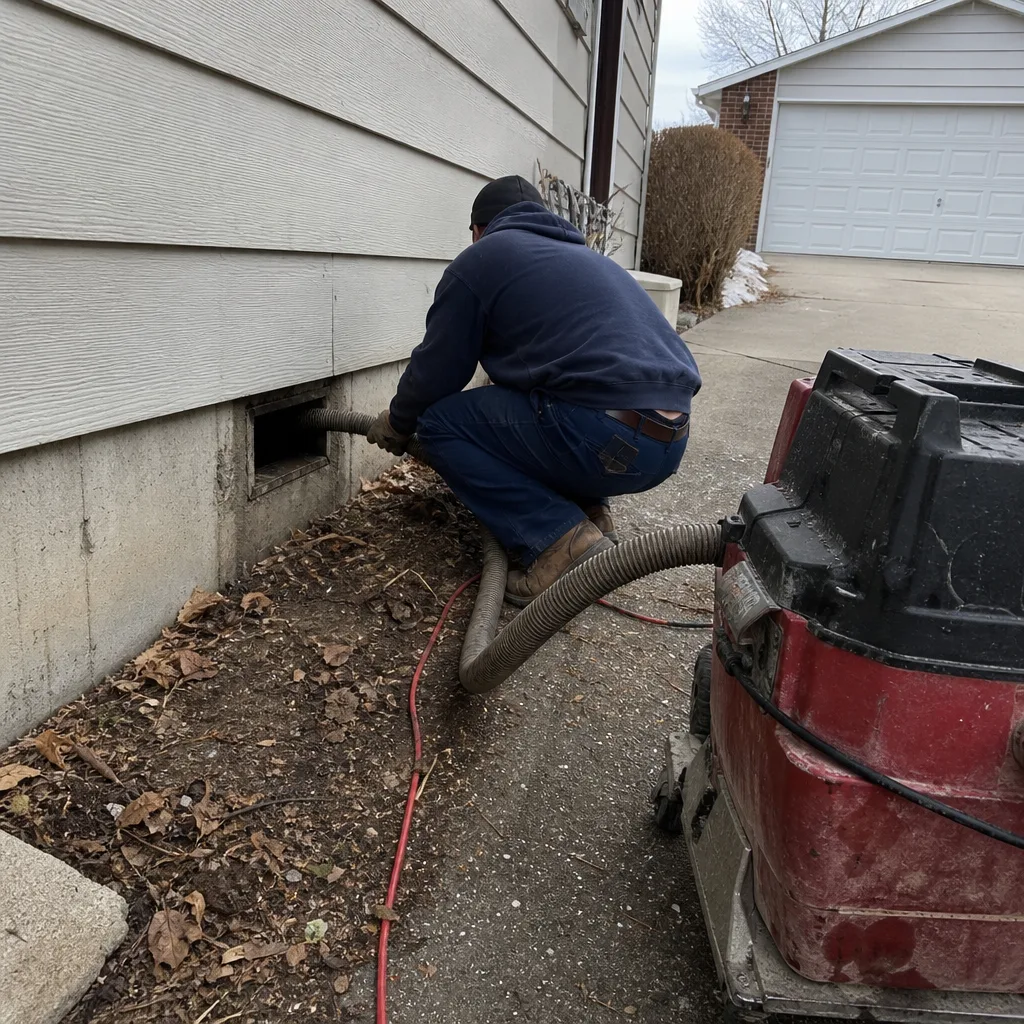 Before
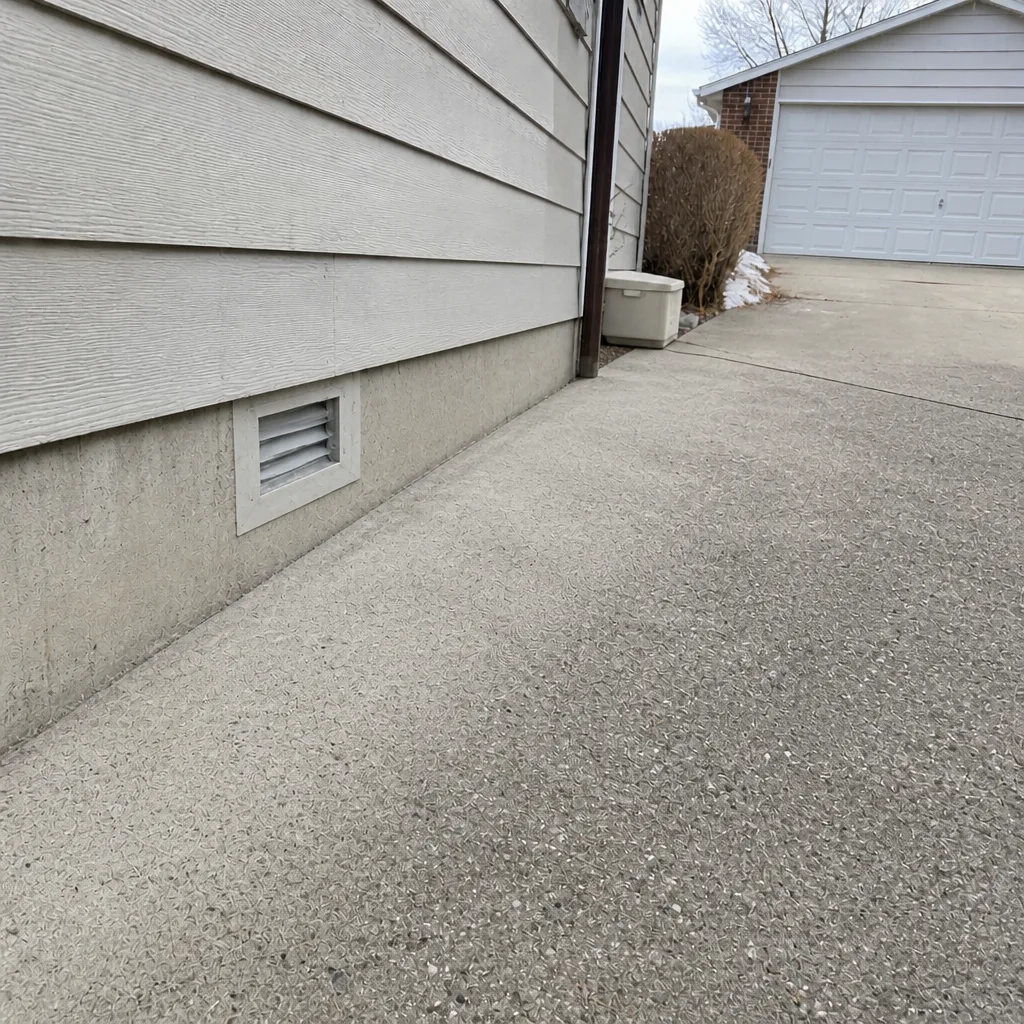 After
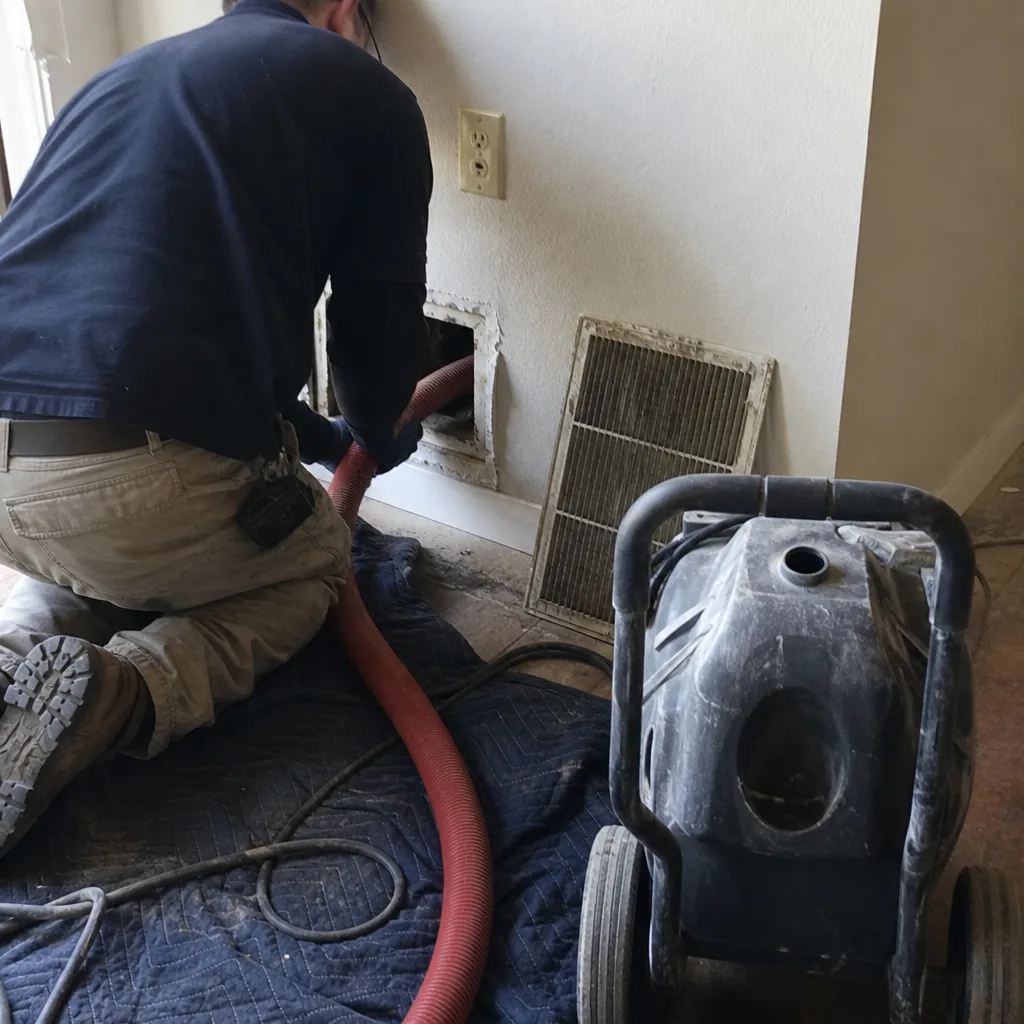 Before
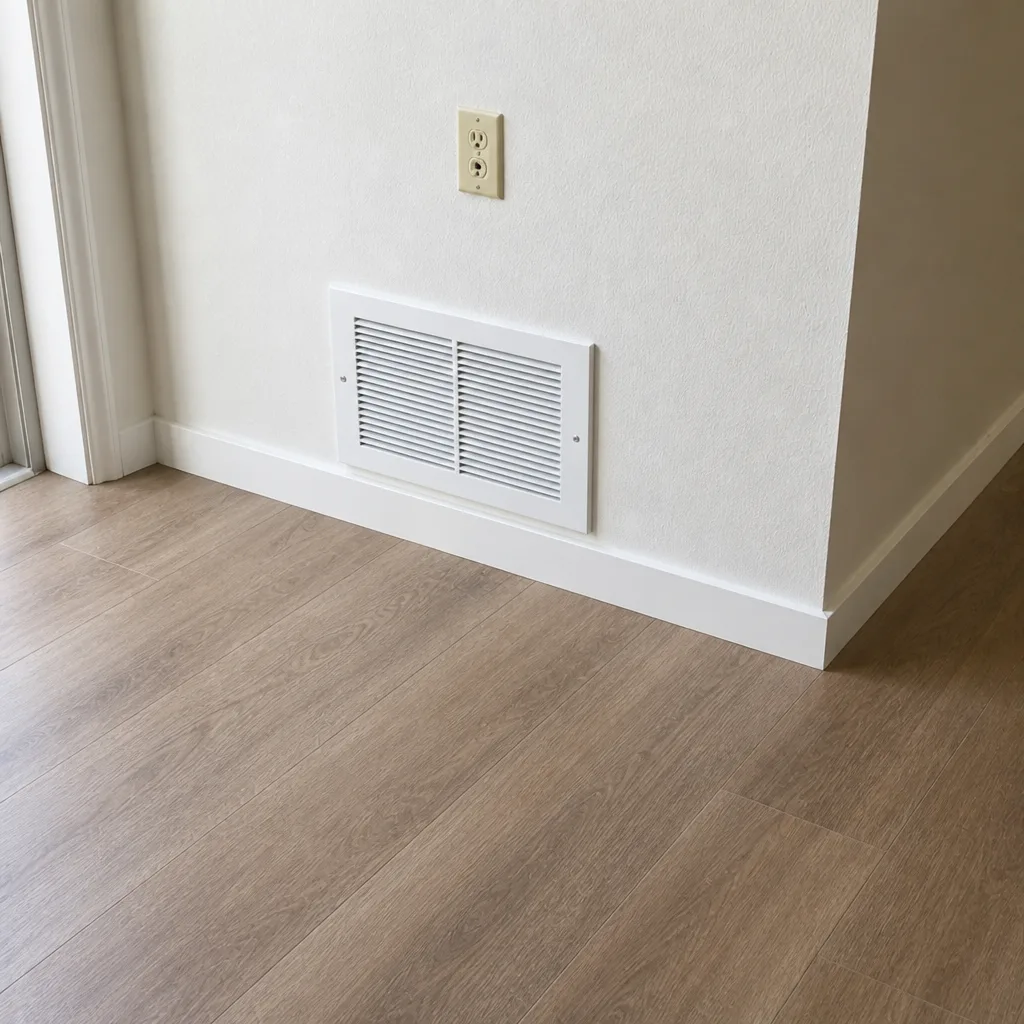 After
 Before
 After
Frequently Asked Questions
No. Cleaning an existing duct system is maintenance and doesn’t require a mechanical permit in Brighton. The permit question only enters the picture when the work extends beyond cleaning into repair, sealing at scale, or any modification of the duct system’s layout. Call (877) 770-1719 for an exact quote on cleaning; estimates are free.
It depends on scope. Small, local sealing at a joint or boot is usually treated as repair and doesn’t require a permit. Larger sealing that changes how the system’s components connect, or that involves cutting new access points, is generally classified as alteration and would need a mechanical permit. Confirm with the City of Brighton building department before treating a seal job as permit-free.
Check whether the address is inside the Brighton city limits or in the unincorporated county area. Your property tax notice or a call to either department with the parcel number will confirm it. The two departments can have different accepted code editions and permitting procedures, so it’s worth checking before any duct work begins.
Yes, potentially. Colorado is a disclosure state, and unpermitted work is generally a disclosable condition. A buyer’s inspector will often flag unsealed or improperly installed duct repairs, which can turn into a negotiation item at closing. Documented, permitted work avoids the issue. Call (877) 770-1719 to schedule a cleaning and assessment that gives you a documented starting point.
A written scope of work, before-and-after photos of your own system, the equipment used, and the name of the technician on the invoice. If a permit was pulled, ask for the permit number. Rotobrush and Nikro are the industry-standard professional duct cleaning equipment brands, so ask what equipment is actually being used if the scope suggests contamination.
Yes. Cutting a new access panel into the duct system is a modification, not a cleaning step, and in most cases that scope falls under permitted mechanical work. Before agreeing to an added access panel, ask why it’s needed and whether a permit will be pulled. Call (877) 770-1719 for a free estimate and clarification on scope.
The Bottom Line
Air duct cleaning in Brighton doesn’t need a permit. Duct repair and sealing can, depending on scope. Duct modification, especially as part of an HVAC changeout, almost always does. The line between them is the story here, and it’s worth knowing before a technician is standing in your basement. Get a written scope, ask about permits if anything beyond cleaning is proposed, keep photos of your own system, and confirm whether your property is under city or county jurisdiction. That record protects you, whether you’re staying in the home for decades or selling it next year.
If you’re planning a cleaning and want to know whether your system has any repair or permit-level issues, our Brighton Air Duct Cleaning Pros team can walk through the scope with you. We keep the cleaning side simple, and when repair or sealing is involved, we tell you upfront whether a permit is likely to be part of the picture.
Contact
Call Brighton Air Duct Cleaning Pros at (877) 770-1719 for a free estimate on air duct cleaning, dryer vent cleaning, HVAC cleaning, duct repair and sealing, or air quality and sanitizing. We answer 24/7. Fast dispatch from 7am to 7pm, Sunday through Friday. We’ll clarify the scope, tell you what likely needs a permit and what doesn’t, and put the price in writing before a technician starts. One flat price per system, agreed before work begins. Before-and-after photos of your ducts come with the job.
Written by the team at Brighton Air Duct Cleaning Pros.